


2020 Global Smart Education Conference "ICT for Innovative Development in Higher Education" Forum Held

On the afternoon of August 22, 2020, the "2020 Global Smart Education Conference" - "ICT Forum for Promoting Innovative Development in Higher Education" was held online and in person, and was broadcast live through Xuetang Online. The Higher Education Research Center of Southern University of Science and Technology is one of the co organizers of this forum. More than 10 experts from countries such as China, the United States, Singapore, the United Kingdom, and Australia conducted in-depth discussions on hot topics such as ICT promoting innovative development in higher education, as well as international cooperation and exchanges in higher education. Nearly 10000 people watched the online live stream, liked it 309 times, and the reading volume reached 71000.
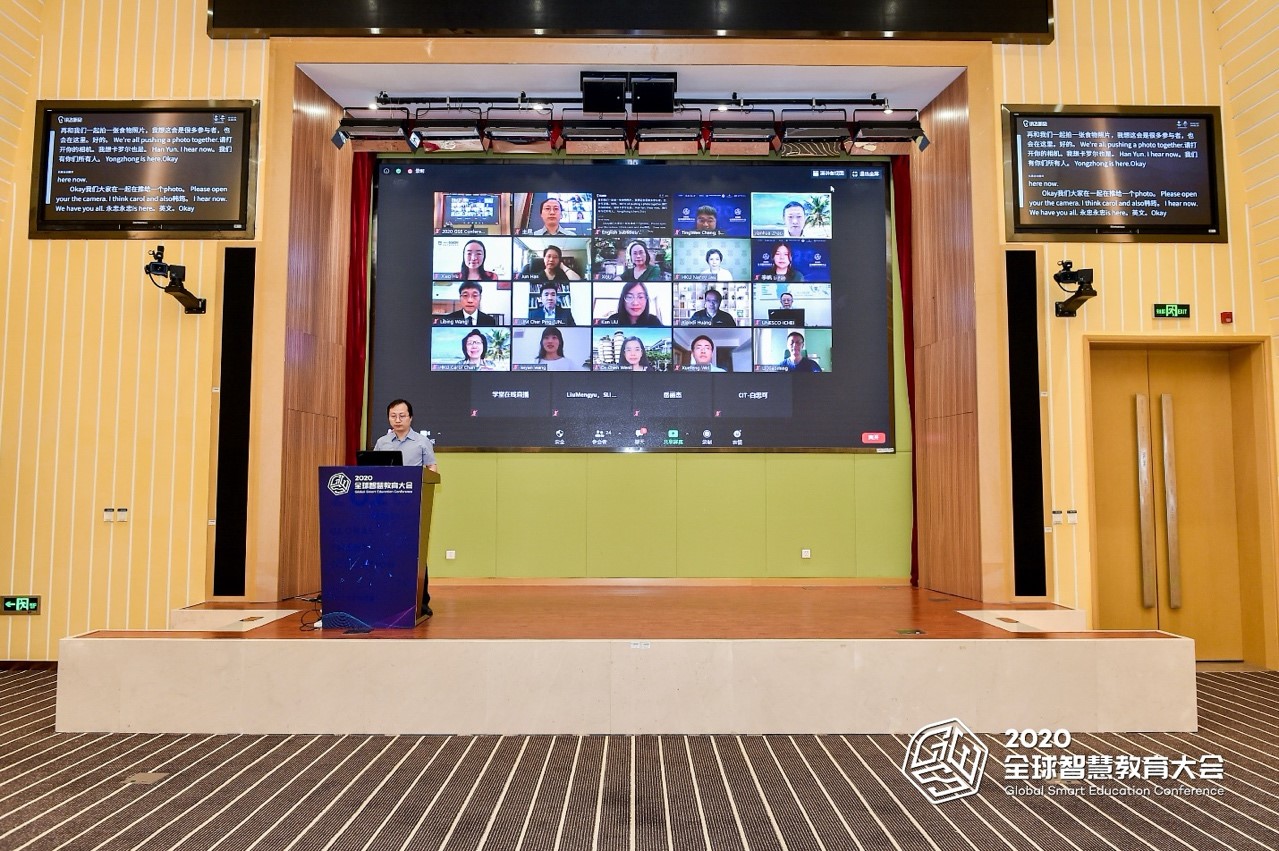
At the opening ceremony of the forum, Wang Libing, Director of the Department of Educational Innovation and Skills Development at the UNESCO Asia-Pacific Regional Bureau of Education, delivered the opening address. He introduced UNESCO's work on the informatization of higher education, as well as the extensive work done in the Asia-Pacific region in recent years, including the implementation of a series of projects, the development of MOOC courses, and cooperation with the Education University of Hong Kong to promote online and blended learning. He believes that the Open University system uses remote and mobile methods to deliver higher education courses as its primary means. For traditional universities, integrating online and blended learning into mainstream teaching practices is not easy. The COVID-19 pandemic has prompted us to truly consider how to integrate online and blended learning into the mainstream of higher education, in which ICT can play a positive and crucial role. He believes that this forum provides an excellent opportunity to explore the use of ICT to promote educational development, share best practices, actively respond to the UN 2030 Education Goals, and promote and strengthen international cooperation in the field of higher education informatization.
In his welcoming remarks, Li Ming, Director of the UNESCO Centre for Higher Education Innovation and Chair Professor of the Higher Education Research Center at Southern University of Science and Technology, first welcomed the guests and online participants. He introduced the innovative work carried out by the Innovation Centre since its establishment. It has already launched numerous higher education cooperation projects in countries along the Maritime Silk Road, including the "Digital Education Link Project" and the "Smart Classroom Project," and has established strategic partnerships with four universities in Asia and seven universities in Africa through signed MOUs. In April 2020, the Innovation Centre spearheaded the establishment of the "International Institute for Online Education (IIOE)," with partner institutions from developing countries in the Asia-Pacific and Africa regions, as well as partner institutions and enterprises in China. Since its establishment, the IIOE has conducted various training and resource promotion activities, providing concrete support for teachers in Asian and African universities to conduct online learning during the pandemic. The Innovation Centre has become one of the most active institutions within the UNESCO system during the pandemic.
During the results release session, Professor Zhao Jianhua of the Higher Education Research Center at Southern University of Science and Technology, representing the China Internet Learning White Paper project team, briefly introduced the main contents of the "2019 China Internet Learning White Paper" and explained the time, location, and method of its official release. He mentioned that the China Internet Learning White Paper project, launched in 2014, has gradually formed a local brand value over six years, thanks to the joint efforts of various parties, playing a leading and overseeing role in the integrated development of educational informatization and the overall ecosystem of internet education. He welcomed everyone to the white paper release conference to be held in Qingdao on August 29, 2020, which will be streamed online.
Professor Gu Xiaoqing of East China Normal University, representing the white paper project team, released and systematically introduced the compilation ideas and research results of the "2019 China Higher Education Internet Learning Development Report." Through data analysis, she presented the development status of internet learning in the field of higher education in 2019, the characteristics of learners in higher education, and the existing problems and trends in internet learning development. She pointed out that the revolutionary impact of information technology on higher education has begun to emerge, but there is still a gap between its current state and the requirements of the new era. The third achievement was released by Zhou Wei, Technical Director of the Academic Affairs Department (Graduate School) of Beijing Normal University and a doctoral student in the Faculty of Education at Beijing Normal University, on behalf of the project team, who released the "Virtual Simulation Technology Guide."
During the forum's keynote report session, Han Yun, Vice President of Higher Education Press and Deputy Director of the Committee for International Online Courses of the Ministry of Education; Chirp Lim, Visiting Professor of the Higher Education Research Center of Southern University of Science and Technology and Chief Professor of the Education University of Hong Kong; Professor Wang Libing, Director of the Department of Educational Innovation and Skills Development of the UNESCO Asia-Pacific Regional Bureau for Education; Professor Nancy Law of the Faculty of Education of the University of Hong Kong; Professor Chen Wenli of the National Institute of Education, Nanyang Technological University, Singapore; Wang Shuaiguo, President of XuetangX and founder of Rain Classroom; Professor Xiaodi Huang of the School of Computing, Charles University, Australia; and Professor Nicholas Bowskill of the University of Derby, UK, gave insightful presentations. Vice President Han Yun introduced the construction and application of the iCourse International Platform, providing a systematic overview of its foundation, construction, and operation. Currently, 291 courses from 74 universities have participated in the iCourse International Platform, covering disciplines such as medicine, natural sciences, economics, and AI & VR. The iCourse International Platform has been selected as part of UNESCO's Global Education Alliance, promoting itself globally as a distance education solution for learners worldwide. Professor Chirp introduced the International Institute for Online Education (IIOE), jointly initiated by the UNESCO Higher Education Innovation Center (Shenzhen, China), 11 leading universities in the Asia-Pacific and Africa regions, 4 Chinese universities, and 8 high-tech enterprises. This project aims to increase access to quality higher education in developing countries through the Belt and Road Initiative, serving as an online training platform to enhance the ICT capabilities of teachers in partner institutions in developing countries. Utilizing the IIOE online course platform, high-quality online courses are provided under the supervision of the curriculum steering committee, with clear monitoring and evaluation schemes and strong support from multilateral partner institutions and universities. This helps teachers in partner institutions in developing countries improve their ICT application skills, establish blended learning and online learning capabilities, thereby increasing their access to quality higher education and better achieving UNESCO's "Education 2030 Goals."
In his report, Director Wang Libing pointed out that the outbreak of COVID-19 has propelled online learning from a supplementary learning role to a mainstream educational form, and online-blended education will become the new normal in education in the future. He believes that without a supportive ecosystem to bridge the gaps between different fields, mainstreaming cannot be achieved. This new ecosystem requires not only policy and mechanism support and the upgrading of ICT infrastructure, but also the improvement of institutional capacity building and a rethinking of project and curriculum design. Professor Nancy Law interpreted the importance of professional learning design in the new normal from the perspective of learning design. She proposed using online learning design as a design tool, with the learning design triangle framework as theoretical support, to cultivate teachers' hierarchical, systematic, and institutionalized learning design capabilities. She used the curriculum practice of the University of Hong Kong as an example to illustrate the application of ICT-supported innovative learning design in higher education. Professor Wenli Chen shared her experience in scriptwriting and evaluating computer-supported collaborative argumentation. She proposed using a spiral model of collaborative learning to improve and utilizing apple tree technology to evaluate and support students' writing argumentation, cultivating students' critical thinking skills. Wang Shuaiguo introduced the contributions of XuetangX and YuChun to the world during the pandemic. XuetangX, the world's first large-scale online Chinese classroom platform launched by Tsinghua University, launched its international version during the pandemic and made it freely available to learners worldwide. During the pandemic, it served 3 million learners per second. Furthermore, the international version of XuetangX integrates with XuetangX Rain Classroom, allowing authorized courses to be used by Rain Classroom teachers and students globally for blended teaching and learning. It provides universities with big data support related to courses, making teaching and learning data visible. In addition, XuetangX and Tsinghua University jointly launched the Cloned Classroom and the "Weiyang Project."
Professor Xiaodi Huang shared how to combine learning assessment with online course knowledge to create a multimedia innovative evaluation mechanism. Utilizing big data, it provides more precise and diversified tracking and evaluation of students' learning processes and outcomes, and uses this as support to provide students with effective online learning feedback and suggestions. Professor Nicholas Bowskill introduced the educational transformation in the post-autonomous education era, exploring related ideas on educational transformation and development. Using a case study from the University of Derby in the UK, he proposed that post-autonomy in the current new normal is a unique group-based learning approach. It uses a sense of belonging to the group as the main design goal to support development within and between groups, supporting the paradigm shift in education from individual to collective learning under the new normal.
During the forum discussion, Professor Wenli Chen from the National Institute of Education at Nanyang Technological University, Singapore, shared four blended learning models implemented by Nanyang Technological University during the pandemic. Professor Li Xiaoming from Peking University suggested that whether it's "supporting teaching" or "improving teaching," online education will inevitably become mainstream. For teachers who enjoy exploring teaching methods, the "uncharted territory" provided by the new normal of online teaching offers them enormous creative space. Instructional design under the new normal should aim for high expectations, provide scaffolding, and encourage and help students climb the ladder of learning independently. Professor Carol Chan from the Faculty of Education at the University of Hong Kong analyzed the challenges and opportunities of higher education in the post-pandemic era from the perspectives of learning science and knowledge construction, and shared innovative design cases of knowledge construction in higher education during the pandemic. Professor Gu Xiaoqing from East China Normal University discussed the current state of internet learning development in higher education in 2019 and the internet learning habits and preferences of learners in the field. She pointed out the necessity of cultivating students' self-directed learning abilities under the new circumstances of blended learning in the post-pandemic era, and shared feasible suggestions on how to improve students' online learning abilities.
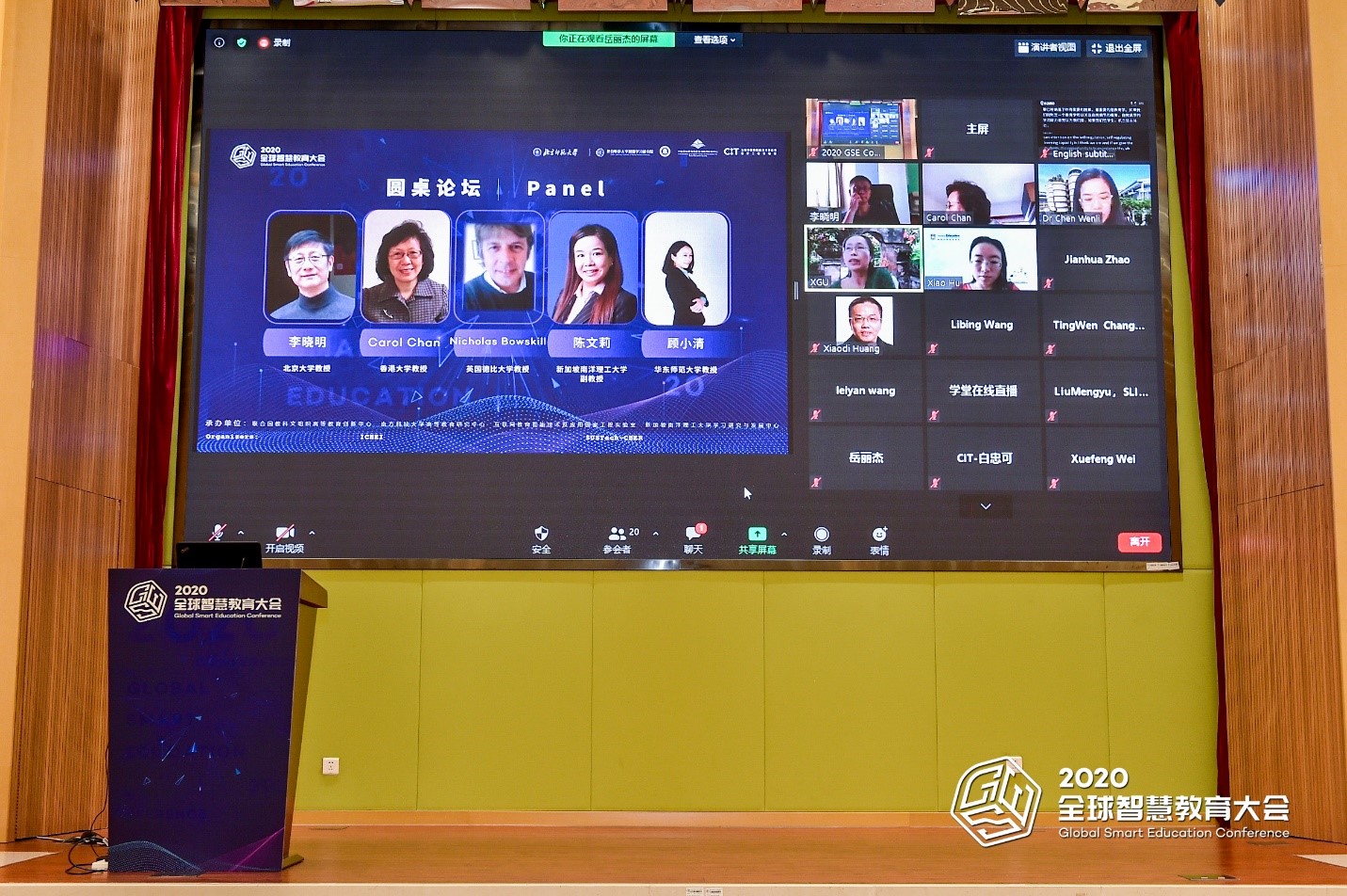
This forum provided a multi-perspective platform for exploring the use of ICT technologies to promote innovative development in higher education. Many of the topics discussed and exchanged addressed core issues in the current application of information technology in higher education, and are also crucial for improving educational quality, expanding educational scale, and combating the COVID-19 pandemic. We hope that this forum will contribute to better utilizing ICT technologies to support innovative development in higher education, and help countries around the world, especially developing countries, better achieve the global Education Goals 2030.


