


The Academy of Humanities and Social Sciences held an academic seminar on "Characteristic Liberal Arts General Education and Innovation Talent Training"

20225Month15On the same day, the "Academic Seminar on Characteristic Liberal Arts General Education and Innovation Talent Training" of the School of Humanities and Social Sciences of SUSTech was held in the round conference hall on the fourth floor of the school conference center.
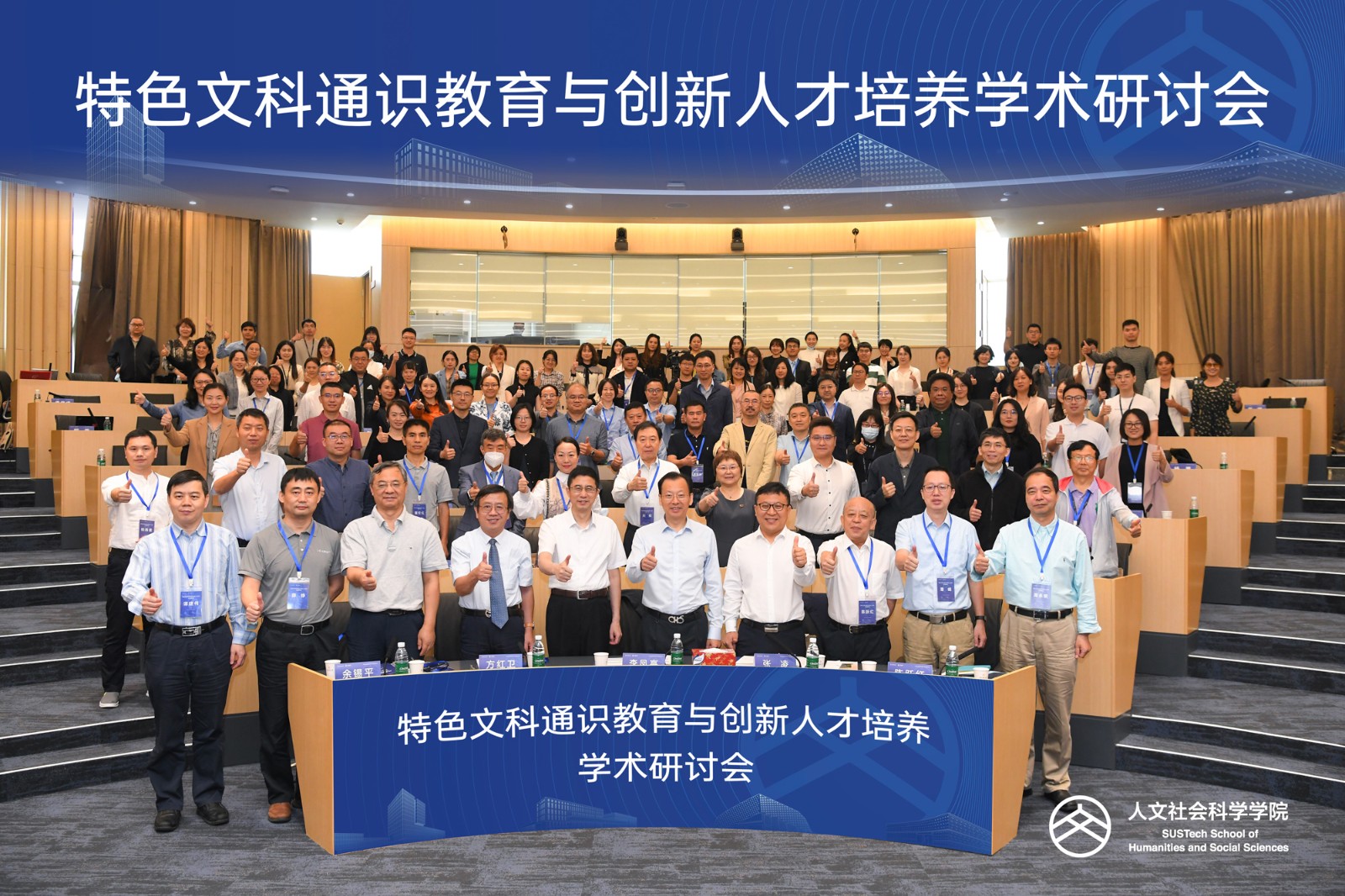
Group photo of all participants of the seminar
Li Fengliang, Secretary of the Party Committee of SUSTech, Zhang Ling, Deputy Secretary of the Party Committee and Chairman of the Trade Union Union, Fang Hongwei, Provost of SUSTech, and Yu Xiping, Vice Provost and Minister of Teaching Work Department, attended the meeting.
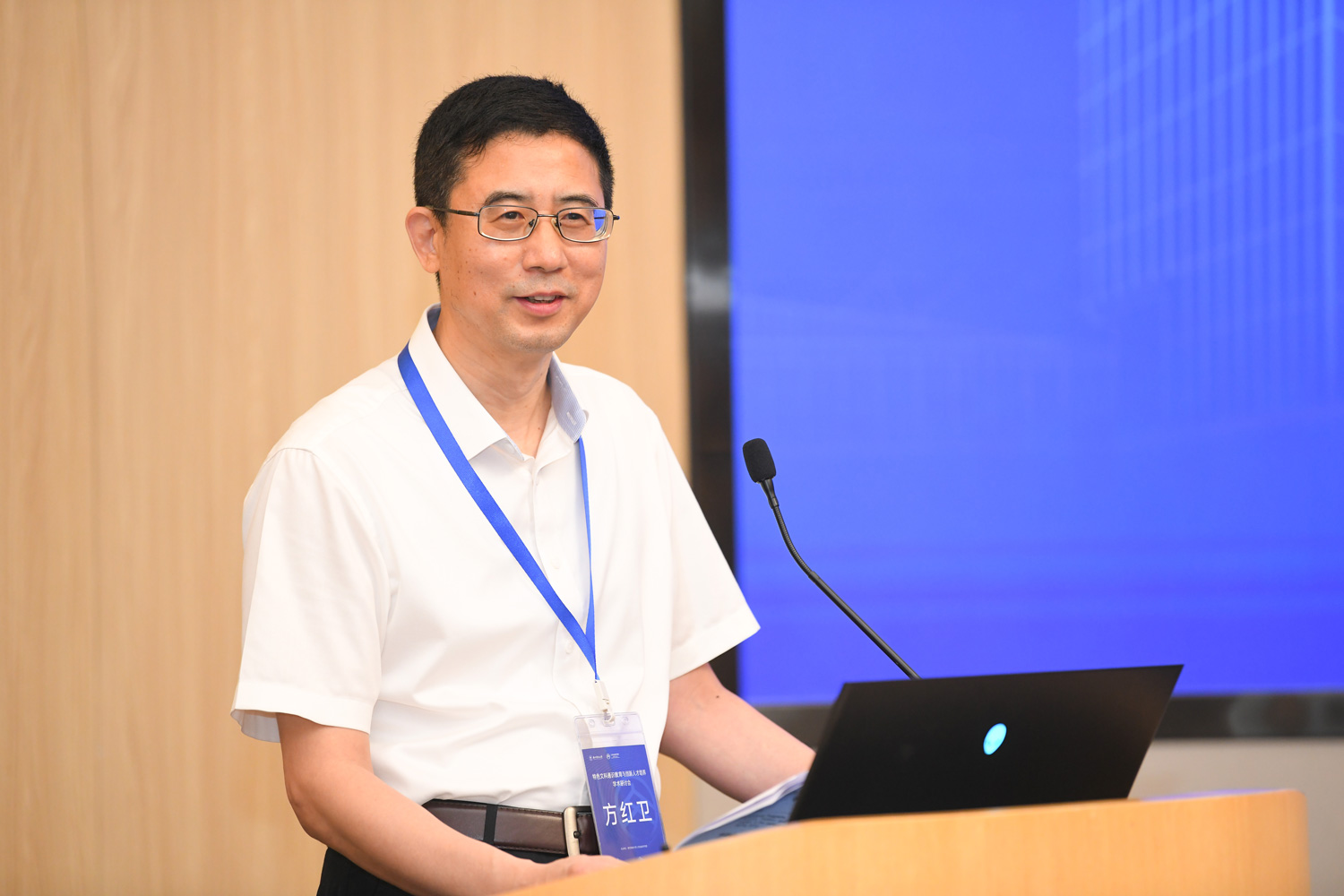
Speech by Fang Hongwei, Provost of SUSTech
At the opening ceremony, the provost, Fang Hongwei, first made a speech, noting that2019&Year5Month7On the same day, the College of Humanities and Social Sciences of SUSTech was officially established, marking the fast track for the school to develop a liberal arts education with distinctive characteristics. Over the past three years, with the concerted efforts of teachers and students throughout the university, the layout of new liberal arts disciplines with the characteristics of SUSTech has been initially formed, and the construction of related disciplines has rapidly advanced into the frontier of domestic polytechnic universities. He stressed that the requirements of the party's successive congresses for education and successor training are very clear. The requirements of the party and the country's talents should become the most basic prerequisite for us to discuss special liberal arts general education and innovative talent training. As long as we thoroughly understand these spirits, many designs and systems behind them will be built. This is an important thing for SUSTech to do, and it is also a place for teachers to use their brains. The school is promoting the strategic planning on the development of the construction of the liberal arts. This undoubtedly provides a general idea for the general education of the characteristic liberal arts, the training of innovative talents and the teaching and research of the Academy of Humanities and Social Sciences, and points out the direction. As long as we work towards this direction and goal, we will definitely be able to build the liberal arts of SUSTech into a tasteful liberal arts general education, laying a solid foundation for the training of innovative talents. At the same time, the relationship between liberal arts general education and innovative talent training is also an important topic for us to answer "Qian Xuesen's question" in the new era. We need to strengthen learning and strengthen research. I hope that the seminars will speak freely, express their opinions, and collide with wonderful ideological sparks to provide a unique new liberal arts program for SUSTech's double first-class and top talent training.
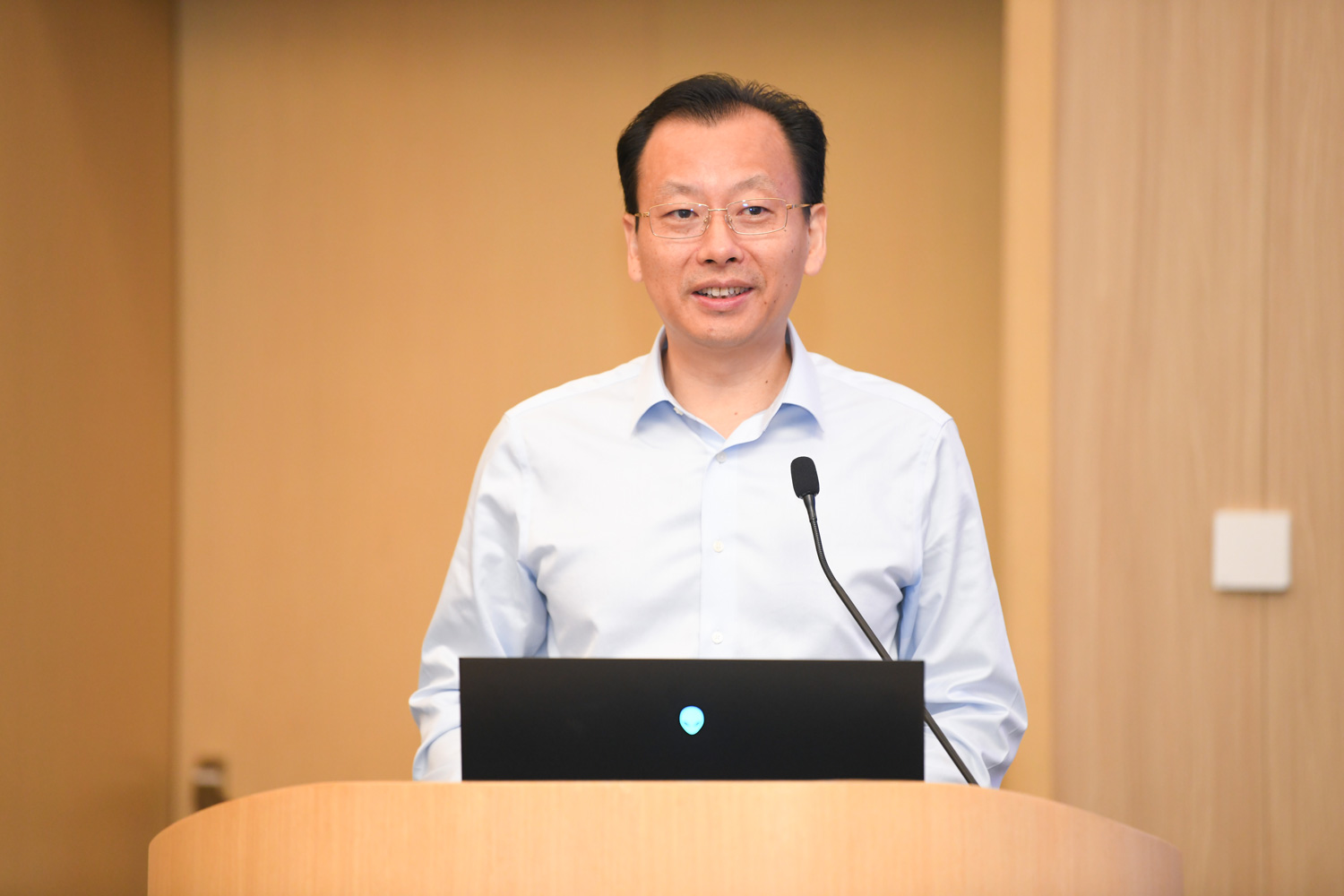
Speech by Li Fengliang, Party Secretary of SUSTech
Subsequently, Party Secretary Li Fengliang made two important speeches on how to recognize the importance of liberal arts general education for the cultivation of innovative talents and how to further play the role of liberal arts general education in the cultivation of innovative talents. He pointed out that in the field of liberal arts general education, in the past few years, SUSTech has initially formed a high-level teaching team from a blank sheet of paper, and the Academy of Humanities and Social Sciences6hubs60The faculty team of many people, from assistant professors to lecturers, each one was very bright. He believes that general education is not "optional", "more or less", "heavy or light", but a very important part of talent training. First of all, the personality education advocated by general education provides an ethical guarantee for innovative talents, and the special liberal arts general education plays an important role in the establishment of people. Cultivating responsible citizens and well-rounded people is the primary goal of liberal arts general education. Secondly, the content of general education provides a good knowledge structure for innovative talents. Therefore, we should especially strengthen the intersection of humanities and science education in our talent training system. This is exactly what general education requires, and it is also the direction of SUSTech's characteristic liberal arts. Thirdly, general education advocating holistic education is conducive to cultivating innovative thinking skills. In the process of general education, we must cultivate students' awareness of problems, guide students to find problems, solve problems, and cultivate new people with critical thinking skills and independent thinking skills in this process. He said, "For whom to cultivate people, what people to cultivate, how to cultivate people." This is what General Secretary Xi Jinping has repeatedly stressed. It is also a question that SUSTech "takes root in China and builds a world-class university" needs to think at any time. How to cultivate more cutting-edge innovative talents for the country, solve the problem of "Qian Xuesen", and develop high-level general education is one of the most important ways! Top scientists often have a good humanistic quality, otherwise it is difficult to become a real people. What kind of system should be established for liberal arts general education at SUSTech, and how can liberal arts general education enlighten students and stimulate their creativity? By what way, how to teach, what to teach? This is a silent process and is the subject of discussion at today's meeting. To this end, Secretary Li Fengliang put forward three requirements: First, to innovate our training philosophy. SUSTech should have its own training model and training concept. It is necessary to build an integration mechanism between general education and professional knowledge education, and promote students' re-recognition and rethinking of their majors through special liberal arts general education. Liberal arts general education should form its own characteristics and path, combining our disciplines and students' growth and development, returning to the original intention of general education and returning to education itself. The school will also focus on supporting and strengthening the multidisciplinary integration of the liberal arts and science and technology, and actively serve the society with characteristic liberal arts resources. The second is to strengthen the systematic planning of the curriculum. We will scientifically and rationally set up curricula, strengthen the systematic planning of general courses, enhance the cross-border integration awareness of curriculum settings, and break through the barriers between disciplines. The Academy of Humanities and Social Sciences should make a systematic plan for the general curriculum. In the special liberal arts general curriculum, not only general knowledge should be taught, but also method training and critical thinking should be cultivated. These courses, the various centers of the College of Humanities and Social Sciences, can be systematically thought about and offered. The third is to build a core curriculum and "golden lessons". The curriculum is the foundation of general education. A good education must not only allow students to have a good knowledge gain, but also form a strong sense of experience and acquisition, so that general education can become a high-quality "golden lesson". It is hoped that the College of Humanities and Social Sciences will focus on building a number of core courses and "gold courses", strengthen the complementarity of core courses and "gold courses", improve the integrity of core courses and "gold courses", highlight the cross-border nature of core courses and "gold courses", and reflect the innovation of core courses and "gold courses". It is necessary to systematically sort out and summarize liberal arts general education in a timely manner in accordance with the clear work goals, tasks and processes of the school's "double first-class" construction plan, and build an upgraded version of SUSTech's characteristic liberal arts education. It is hoped that through today's seminar, we can gradually form a consensus on what is general education, what is special liberal arts general education, what are the characteristics of SUSTech, how to promote the special liberal arts general education of SUSTech, and promote the cultivation of innovative talents through special liberal arts general education. In short, today's seminar is a good start. Next, the relevant departments of the school should organize and hold the school's education teaching and general education work conference as soon as possible to systematically sort out and plan the school's general education system. It is hoped that the Academy of Humanities and Social Sciences will work hard for a long time, keep its integrity and innovation, stop at the best, build a first-class liberal arts general education course with the characteristics of SUSTech, and support the training of top innovative talents and the construction of a first-class university.
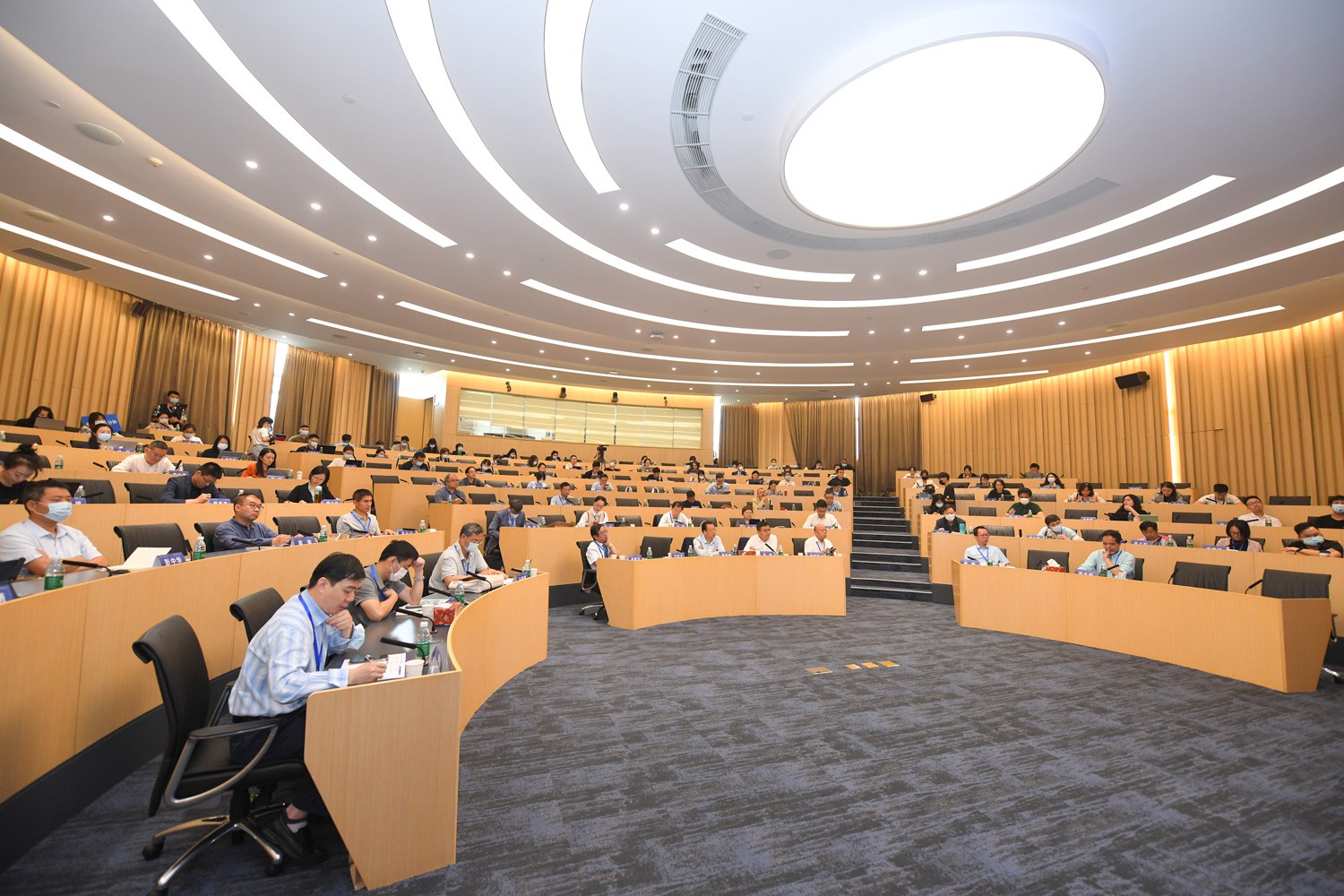
Workshop Live
This seminar is divided into two parts: morning conference presentations and afternoon breakout sessions. The leaders of some relevant business departments and teaching and research units of the school were invited as guests to attend the morning conference. They were: Xue Xue, Minister of Publicity and Public Relations; Lu Qi, Minister of Student Work Department; Wang Dejun, Director of the Ideological and Political Center; Dong Lunhong, Director of the Sports Center; Tan Jianwei, Director of the Admissions Office; Li Xu, Vice President of the School of Creative Design; Lan Hai, Deputy Secretary of the Party Committee of the College of Science; Peng Zhong Zhonghua, Deputy Secretary of the Party Committee of the College of Technology; Yang Zaiyong, Vice Minister of Student Work Department; Tao Xiaoyue, Vice President of Administration of Ren College; Han Yingjie, Vice President of Administration of Shuren College; Lu Yao, Vice President of Administration of the College of Honestyuan; Wang Lingjun, Vice President of Administration of New College; Liu Ping, Vice President of Administration of Shule College, etc. The leadership group of the Academy of Humanities and Social Sciences, the leadership of the Center for the Humanities, the Center for Social Sciences, the Center for Higher Education, the Center for the Arts, the Center for Languages, and the Center for Future Education under the Academy, as well as all faculty and staff110The remaining people attended the full-day meeting.
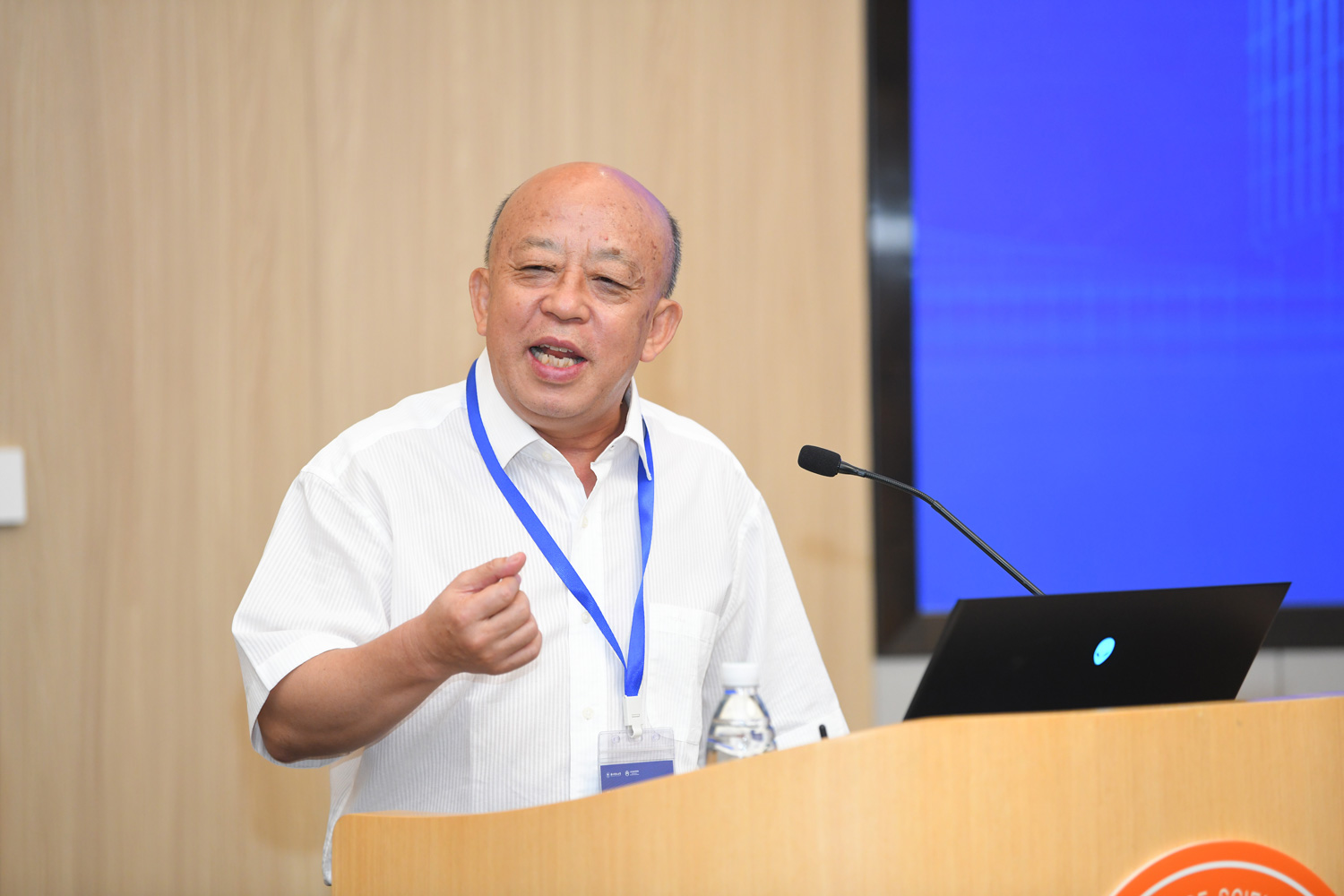
Chen Yuehong, President of the Academy of Humanities and Social Sciences and Director of the Center for Humanities, made the keynote report
In the special report section of the conference, Chen Yuehong, President of the Academy of Humanities and Social Sciences and Director of the Center for Humanities, made the opening keynote report of "Characteristic Liberal Arts, Characteristic General Knowledge and Innovative Talents Cultivation under the Double First-Class Strategy", reviewing the liberal arts of our university6Year Development and College3The history of the development of the year, affirmation of achievements, planning for the future, how to improve the college's general education from the rapid development of "quantitative type" to "quality type" connotation, how to support the development of innovative talents with high-quality and characteristic liberal arts general education, and contribute to the realization of the "335" development strategy goals of our university, carried out a logical and rigorous system analysis and planning arrangements. Next, Yang Guo, Deputy Director of the Humanities Center, Wang Xiaokui, Deputy Director of the Social Sciences Center, Liu Hui, Director of the Arts Center, Li Yuan, Director of the Language Center, Tian Song, Director of the Science History and Science Education Teaching and Research Office of the Humanities Center, Shen Hong, Director of the Higher Education Research Center, Li Mengyang, Postdoctoral Director of the Higher Education Research Center, Pan Feng, Secretary of the Party Committee of the Academy of Humanities and Social Sciences, respectively brought a paper entitled "Course-based, Exploring the Optimum Solution of Humanities and General Education - Construction of the General Education Curriculum System of the Humanities Center", "Fundamentals and Frontiers Equal, Stability and Innovation - Construction of the General Education Curriculum of the Social Sciences Center2.0"Aesthetic Education, Inserting Flying Wings for the Cultivation of Top Innovative Talents", "Benchmarking First-Class Universities, Developing Core Literacy: Characteristic Foreign Language General Education of SUSTech", "Design and Practice of Humanities and Social Sciences General Education Curriculum Oriented to Double-Class Construction", "Research on High-Level University General Education Curriculum", "General Education: Creating Innovative Talents in Liberal Trees" and other seven unique special reports, reported on the achievements, characteristics and development plans of general education in each center, and compared and analyzed the general education situation of first-class universities with international and domestic technical characteristics.
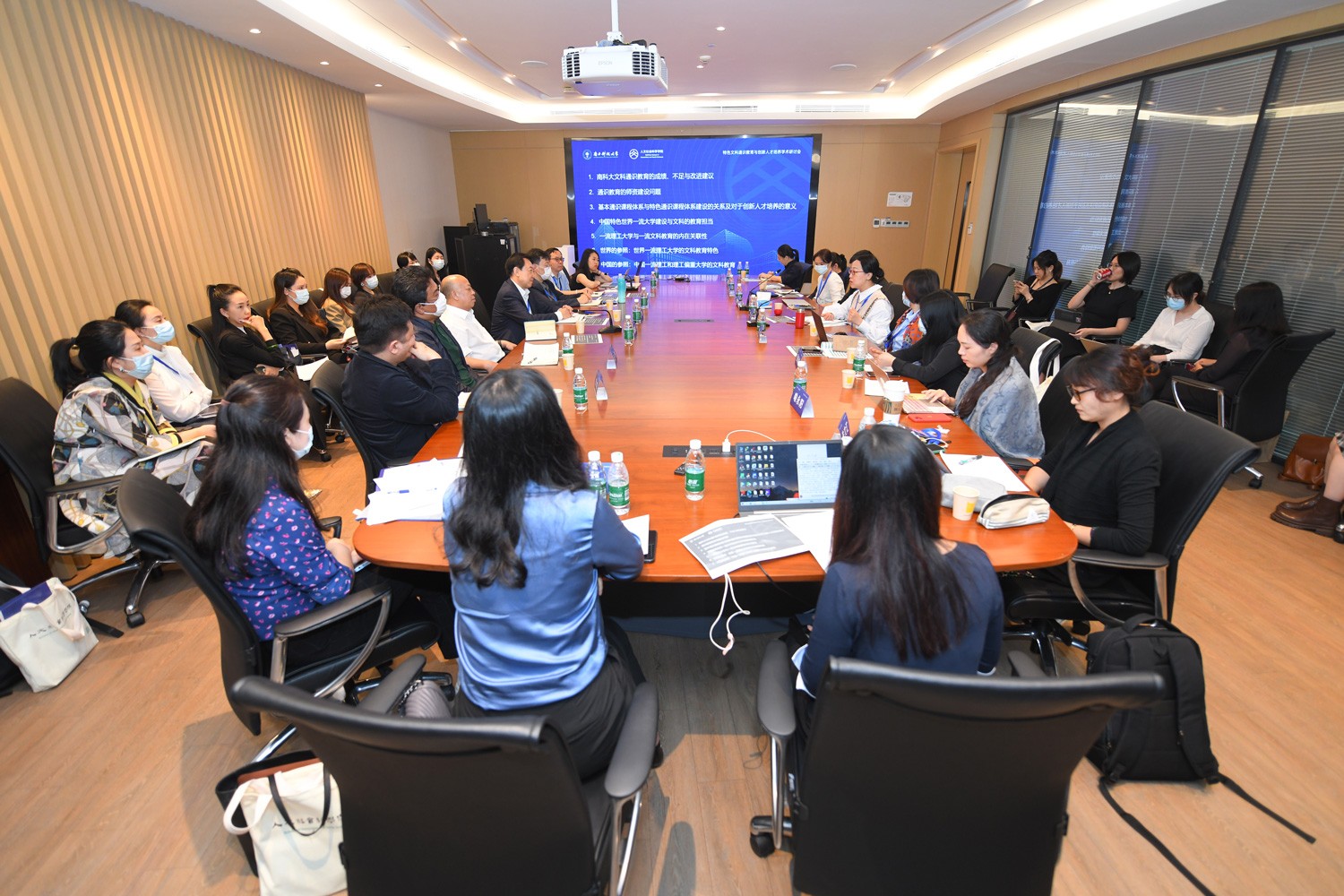
Workshop breakout sessions live
In the afternoon group discussion, the Humanities Center and the Future Education Research Center, the Social Science Center and the Higher Education Research Center, the Arts Center and the Language Center three groups of teachers, respectively, focused on the achievements, shortcomings and improvement suggestions of general liberal arts education at SUSTech, the construction of general education teachers, the relationship between the basic general curriculum system and the construction of the characteristic general curriculum system and the significance for the training of innovative talents, the construction of world-class universities with Chinese characteristics and the role of liberal arts education, the intrinsic relevance of first-class universities of science and technology and first-class liberal arts education, the liberal arts education characteristics of world-class universities of science and technology, and the liberal arts education of China's first-class science and engineering and science and engineering major disciplines.
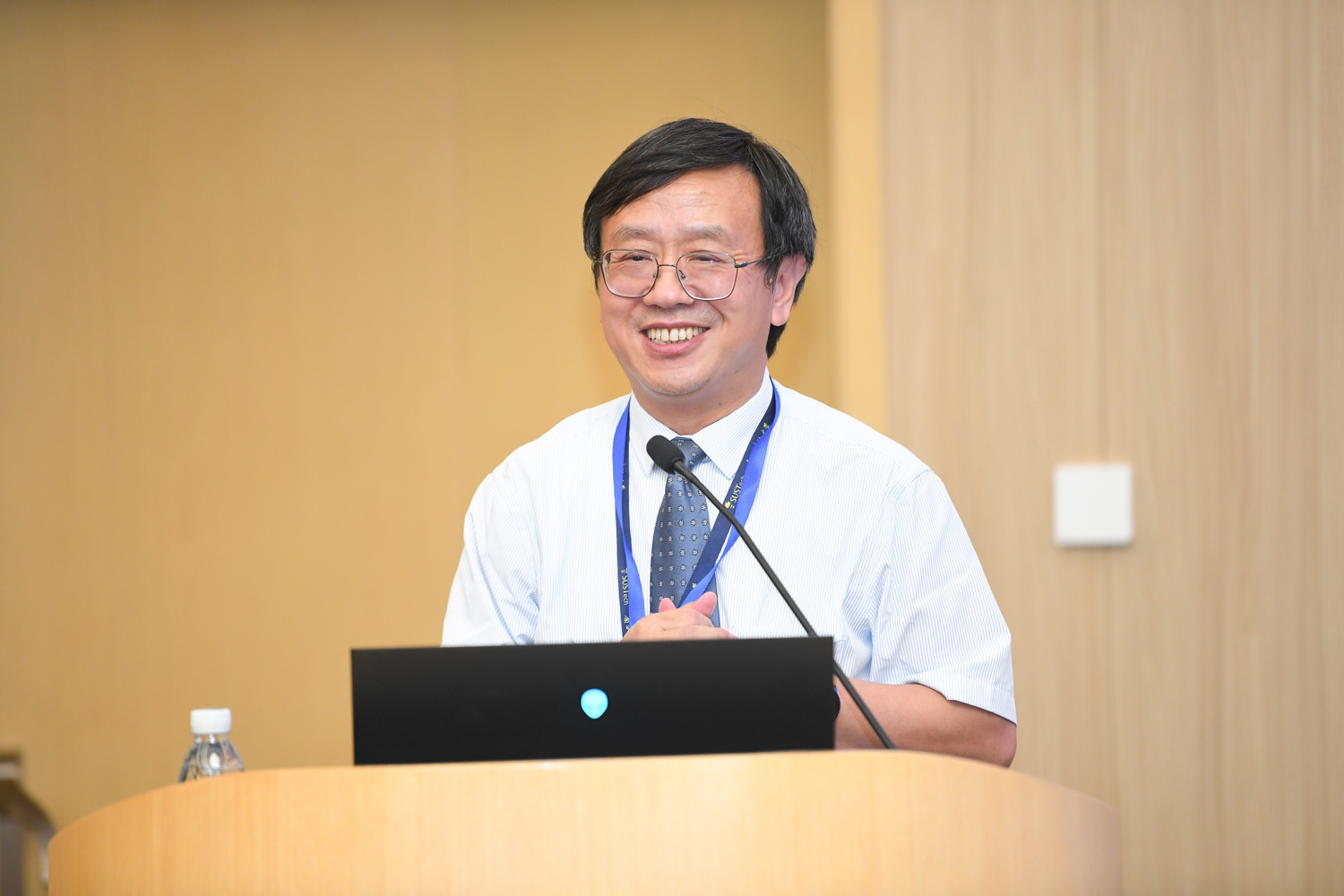
Speech by Yu Xiping, Vice Provost and Director of the Teaching Department of SUSTech
Yu Xiping, Vice Provost and Director of the Teaching Work Department of SUSTech, delivered a speech at the closing ceremony of the seminar. He said that the Teaching Work Department will fully support the unique liberal arts general education and innovative talent training work of the College of Humanities and Social Sciences in practical actions. Chen Yuehong, President of the Academy of Humanities and Social Sciences and Director of the Center for Humanities and Social Sciences, finally made a concluding speech and put forward three keywords for thought: First, to achieve general education2.0Upgrade. Starting from today, our key consideration is to develop and improve the quality and connotation of general education, not only to improve the curriculum, but to raise general education to the perspective of double first-class success or failure, and to the perspective of innovative talent training success or failure. The scientificity, completeness, and features of the course structure need to be upgraded to2.0version, considering the relationship between basic general knowledge and characteristic general knowledge, combining the two, so that people have me and people don't have me. There are also curriculum evaluations, general education evaluations, and future platform construction, curriculum construction, textbook construction, and education and teaching research construction. These four major fields must be upgraded to a higher level. The second is to deal with the integration "relationship" between various disciplines and academia. It's not just interdisciplinary, it's not just about opening up, it's not just about blending in, it's about paying attention to all sorts of educational relationships. First of all, we must pay attention to the relationship between science and engineering and the humanities, and also pay attention to the integration of the relationships within the various disciplines of the liberal arts. We must understand these issues from the historical, especially the social development since modern times and the special situation of Chinese education, and recognize these problems, so that we will know how to communicate, cross and integrate. Finally, we should also pay attention to solving the relationship between the basic general knowledge and the special general knowledge of SUSTech, so please think more. The third keyword is “general knowledge.” The general knowledge here is not a general curriculum, but the knowledge of our teachers, our ideas, and how our education enters the state of general knowledge. This concept involves the transformation of teachers from professional education at home and abroad to general education at SUSTech. He requires teachers of the College of Humanities and Social Sciences to also understand a little science and engineering knowledge. To truly do characteristic general education, they must understand a little more basic knowledge such as artificial intelligence, genetic science, material science, computing humanities, big data archaeology, modern media, smart cities, etc., and build a new interdisciplinary knowledge structure system for liberal arts teachers at SUSTech, so as to become a leader in new general education. Chen Yuehong stressed that we have had a good beginning and the success of the first stage, but there are still many problems and many difficulties to overcome. In the face of this strong social status quo, we should have the spirit of Don Quixote. With such a good team, such a good school, and such a good strategic opportunity as Shenzhen, we are confident that as long as we can persevere, there is nothing in this world that cannot be done. We hope that the next step will be to promote the establishment of a general education committee in the school, from the top-level design to the faculty and departments, so that we can be successful and believe that we will be successful!
Text: Chen Jinsong
Editor: Zhu Yicheng


