


Southern Study Night Talk | Chen Jinsong: Literature is also an important window for us to understand the times

What is the relationship between time and literature?
Are there any fixed evaluation criteria for literary works?
Recently, Chen Jinsong, a full-time lecturer and associate researcher at the Center for Humanities and Sciences of SUSTech, walked into the 15th lecture event of the 12th season of "Shenzhen Scholar • Southern Study Room Night Talk" hosted by the Shenzhen Library to share "Our Times and Its Literature" with readers. It is understood that Chen Jinsong's main academic direction is the study of modern and contemporary Chinese literature, which also includes Chinese contemporary literary criticism and cultural research.
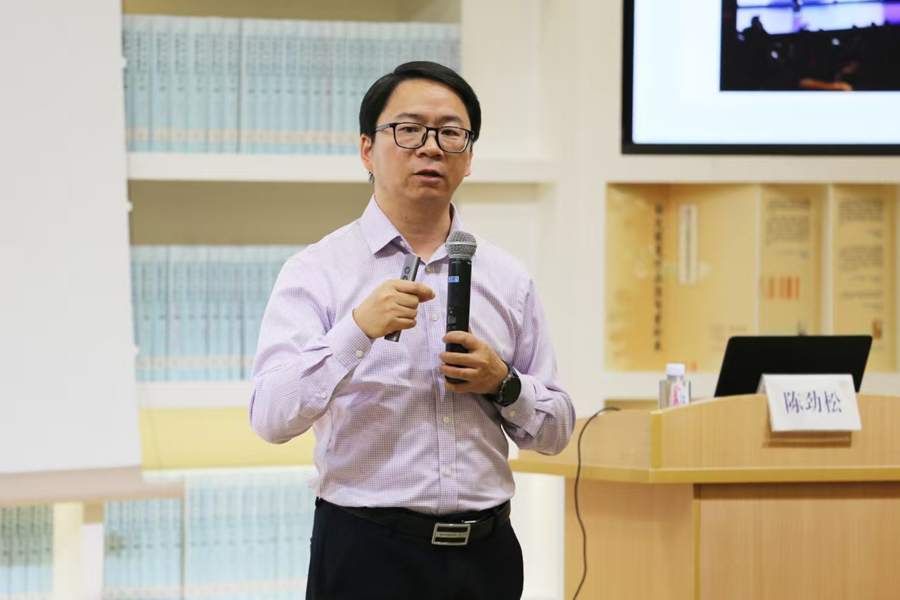
The Tang Dynasty poet Bai Juyi once proposed that "articles are written for the time being, and poetry is written for the time", while the modern scholar Kingdom Wei said that "every generation has a generation of literature". In fact, this has the same direction and meaning, involving the relationship between literature and the times. To this end, in the lecture, Chen Jinsong elaborated on the contemporary writer Wang October's novel "Day and Night" as an example. He introduced that the novel shows the story in the time span of nearly 50 years from the 1970s to 2023 through a protagonist. In different years and different scenes, the development of the fate of the characters changes with the changes of the times. "So rather than writing in the era, it is better for writers to understand the changes of the times in their own way. The relationship between the times and literature is actually complementary. To some extent, the times have made writers, and at the same time, writers and works in turn reflect the times well. We need to understand history. Many times, we may learn from history books. In fact, literature is also an important window for us to understand the times."
Chen Jinsong pointed out that when we refer to Chinese literature, especially modern and contemporary Chinese literature, we will find that all writers and works are particularly closely related to the times. For example, when it comes to the study of contemporary literary history, questions often have time clues or stages. The literary world often says that literature bears witness to the times, so what is literature bears witness to the times? "The ancients had their own sorrows and joys, and the contemporary people also have their own sorrows and joys. Therefore, literature bears witness to the times, and literature is exactly the echo of the times. What happened in the times, what happened in the times, we have to witness through literature. Chen Jinsong said.
However, when it comes to writers and the relationship between their works and the times, we cannot ignore the limitations of the times. Chen Jinsong believes that the writer's view of writing and the writer's understanding of literature are often difficult to escape from their era, that is, there are limitations of the times. Using this criterion, we may evaluate writers' works today from a relatively rational and objective perspective. So if there is literature of an era, then the influence of literature of an era on writers and readers should be said to be mutual.
When it comes to the standard dimension of literary evaluation, Chen Jinsong emphasized that there is no single standard for evaluating writers' works, and different readers and critics have their own perspectives. He personally evaluates works from three dimensions: language, detail, and amount of information. In his view, evaluating a writer, a work, is first and foremost language. Language is the most basic and external form. If the language is not good, the work is difficult to attract in the first place, and it is difficult for people to read it. Then there are the details. Detail constitutes the content of a literary work. For a writer, only the details can stand the test of time. Again, the amount of information. A good work should have a rich amount of information.
"The good works in my mind, the language is exquisite, the details are accurate, the stories are fascinating, and the characters are vivid and vivid, including a leisurely narrative, rich imagination, and alignment with the times and real life, discovering and revealing the truth of our survival. In addition to this, Chen Jinsong believes that good literary works must be big in terms of temperament - from personal me to me in capitals, to paying attention to the spiritual life of all mankind, reflecting the weight of spirit.
Our times call for great literature and classics. At the end of the lecture, Chen Jinsong used the writer Hemingway's sentence "Find your own sentence" to express his expectations for contemporary literary creation. He said that as long as the writer's creations can maintain their uniqueness and find "their own sentences", they will definitely stand out and establish their own style and appearance in the process of changing times.
Transferred from: Wei Peina, Chief Reporter of Shenzhen Business Daily · Reading Creative Client
(Image courtesy of Shenzhen Library)


